
What Does Pothole Damage Actually Cost NZ Property Owners? (2026 Data)
Updated: May 31
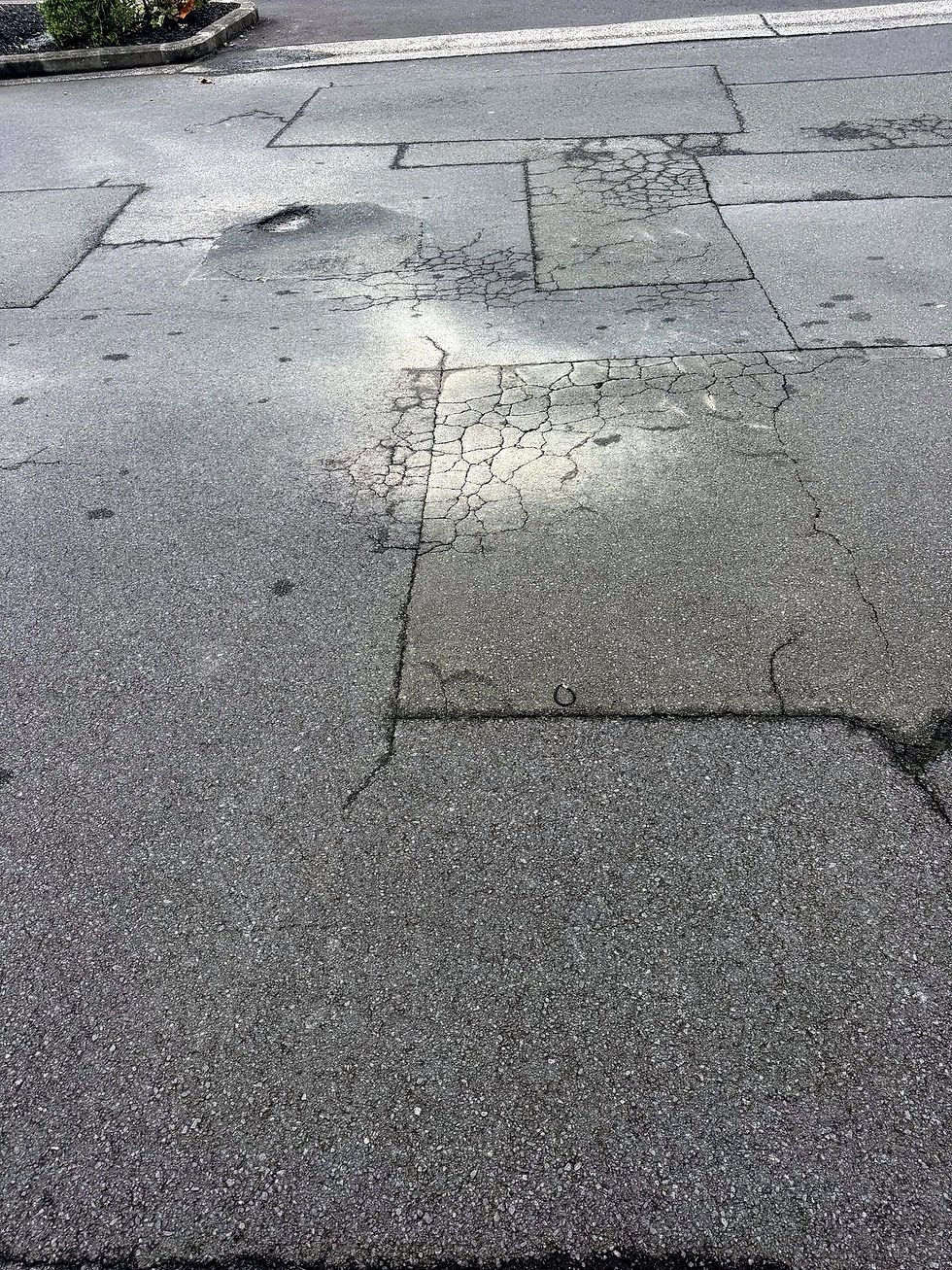
Pothole damage costs NZ property owners far more than the vehicle-side numbers suggest. Industry-cited figures from NZ motor insurers put the average pothole-related claim at NZ$650–$1,400 per vehicle. The bigger cost sits on the property side: tenant complaints, body-corp special levies, deferred-maintenance compounding, and insurance disputes that can take 9–18 months to resolve. We're conducting an LGOIMA request to Auckland Transport to ground-truth the public-road numbers — preliminary estimates below are based on published claims policy and industry-cited figures.
Property-side pothole damage prevention is a Rapidpatch specialty. Auckland direct service is available now — we'll come back to you within 24 hours with a fixed-price quote from a few photos and an honest estimate on the cost of deferring versus the cost of acting now.
Outside Auckland, we're onboarding approved-partner specialists region by region. 5-business-day response with quote and ETA. Same Rapidpatch fixed-price discipline, same 12-month workmanship guarantee on Rapidpatch-installed work. Urgent or large jobs — phone (027) 737 2858.
Fair Trading Act backup: if we can't match you with a vetted partner in your region, we'll refer you to an independent specialist or return your photos and quote at no cost, no obligation.
The hidden cost stack
When people talk about pothole costs, they usually mean the bent rim or the new tyre on their car. That's the smallest line on a longer bill. Across our Auckland body-corp and commercial customer base, the typical pothole cost stack looks like this:
Vehicle damage — industry-cited average NZ$650–$1,400 per claim, mostly tyres, rims, alloys, and suspension components. AMI, Tower, and AA publish quarterly claims data that supports this range.
Tenant or resident complaints — typically 3–6 hours of property-manager time per complaint, plus the relationship damage that compounds over a lease term. At an Auckland property-management billable rate of $90–$160/hr, a single complaint costs the owner NZ$270–$960 in management time alone.
Body-corp special-levy disputes — an unexpected $15,000–$40,000 resurface that wasn't in the long-term maintenance plan generates committee meeting time, owner disputes, and occasionally legal review at NZ$280–$420/hr. Indirect cost easily NZ$2,000–$8,000 on a $20,000 resurface.
Insurance dispute time — a denied or contested public-road pothole claim takes a typical 9–18 months and 8–20 hours of owner time to resolve, often with a final outcome of partial or no reimbursement.
Deferred-maintenance compounding — the biggest line, and the least visible. A $300 crack-seal in year 3 prevents a $1,400 patch in year 5 which prevents a $14,000 partial resurface in year 9. Skipped early intervention typically costs 7–15x the original prevention spend by the time the failure reaches structural.
Vehicle damage — the visible number
Per AA Insurance's published claims data (cited in their 2023 Annual Motor Claims Report) and corroborated by AMI, Tower, and State, the average NZ pothole-related motor claim falls in a NZ$650–$1,400 range. The lower end represents a single tyre replacement; the upper end includes alloy-rim refurbishment or suspension component damage. Severe cases involving full wheel assemblies, panel damage, or accident liability can run NZ$4,000–$12,000+.
Two facts that surprise property owners: first, most pothole-related claims settle for less than the policy excess once the insurer applies depreciation to the damaged components, meaning the driver often pays out of pocket. Second, severe-event claims trigger no-claims-bonus loss, so the true cost to the driver over a 3–5 year horizon can be 1.5–2x the headline repair number.
Body-corp special levies — the silent compound
Body-corp asphalt typically follows a 12-year maintenance arc when managed proactively (we cover this in detail in our Body Corp Asphalt 12-Year Maintenance Roadmap). Annual visual audit, year-1 to year-7 spot patching, year-7 to year-10 sealcoat, year-22 to year-28 full repave. Total spend over the cycle: typically NZ$15,000–$35,000 depending on site size.
When the cycle is skipped, the failure mode is predictable: year-7 ignored crack becomes a year-9 pothole becomes a year-11 alligator-cracking patch zone becomes a year-13 emergency resurface called in panicked committee minutes. That emergency resurface typically runs NZ$30,000–$60,000 on a body-corp accessway because the work is unscheduled, crews are at premium rates, and the scope creep is uncontrolled. The total 12-year cost when the cycle is skipped is roughly 2–3x the cost when it's followed.
Public-property pothole liability — who actually pays
NZ liability for pothole damage to vehicles depends on where the pothole is. Three jurisdictions matter:
State Highway potholes — NZTA Waka Kotahi is the responsible authority. Per the NZTA Claims Policy, claims are assessed on whether NZTA knew about the defect and had a reasonable opportunity to repair it before the damage occurred. Approximately 30–40% of claims succeed in part.
Local road potholes — the relevant council is responsible. In Auckland this is Auckland Transport. AT's published claims data (and the published claims data of comparable councils) shows the same prior-knowledge test applies, with similar success rates.
Private property potholes — the property owner is liable. On body-corp common property, that's the body-corp collectively. On a leased commercial site, the lease usually allocates the liability to the lessor unless the lease specifies otherwise.
The practical effect: a damaged-tyre claim from a body-corp driveway pothole usually lands back on the body-corp, which usually has no asset-side insurance cover for it and pays from reserves or special levy. This is the single biggest source of body-corp dispute we see in our customer-facing photo reports.
The compounding cost of waiting — worked example
Take a typical Auckland body-corp 800m² accessway, laid in 2010, currently year 16 of life. Year-3 hairline cracks are visible. Three intervention scenarios:
Scenario A — crack-seal at year 3 ($300). No structural failure by year 7. Single small patch at year 9 ($550). Sealcoat at year 10 ($8,000). Total to year 12: $8,850.
Scenario B — skip year-3 crack-seal. Year 5 cracks have widened. Year 6 pothole forms in wheel path ($800). Year 8 second pothole ($800). Year 9 alligator cracking patch zone ($2,400). Year 11 partial resurface (~30% of surface) ($14,000). Total to year 12: $18,000.
Scenario C — fully deferred. No work between year 1 and year 13. Year 13 emergency mill-and-fill 800m² ($45,000–$60,000) called after committee receives tenant insurance claims and pressure-tests reserves. Total to year 13: $45,000–$60,000.
Scenario A is the proactive cycle. Scenario B is the reactive cycle. Scenario C is the deferred cycle most under-managed sites end up running. The total-cost gap between proactive and deferred is roughly 5–7x on a 12-year horizon. That's the real cost of waiting.
What property managers can do this week
Audit cadence: walk every driveway, accessway, and carpark once every 6 months with a phone camera. Photograph any visible cracking or settlement. Date-stamped photos build the prior-knowledge evidence trail that protects you against tenant claims.
Photo evidence: when a tenant or resident reports a defect, photograph it immediately and ask for their photo too. This is the single most useful step for insurance and liability purposes — a date-stamped photo log resolves disputes faster than any written report.
Budget rule-of-thumb: budget 0.5–1.0% of pavement replacement value per year for ongoing maintenance. On a body-corp accessway with a $50,000 replacement value, that's $250–$500/year. Most under-managed sites budget zero and pay it back in special levies.
Specialist on retainer: have a fixed-price photo-quote relationship with a patch-repair specialist so small defects can be resolved in days rather than weeks. The longer the gap between defect appearance and intervention, the larger the eventual bill.
Common questions
Who's liable for pothole damage on a public road?
The relevant road controlling authority — NZTA Waka Kotahi on state highways, the local council on local roads. Both apply a prior-knowledge test: did the authority know about the defect and have a reasonable opportunity to fix it. Drivers can claim, but the burden of proof is on the driver to show the authority should have known.
Who's liable for pothole damage on private property?
The property owner. On a private residential driveway, the homeowner. On a commercial site, the lessor unless the lease specifies otherwise. On body-corp common property, the body corp collectively. Most domestic motor policies exclude private-property damage entirely, so the cost typically lands directly on the property owner or body-corp.
Who pays on body-corp common property?
The body corp collectively, funded from levies or special levy. Most body-corp insurance policies do not include public-liability cover for vehicle damage on the driveway. This is the single most common surprise we see in our customer-facing audit reports — owners assume there's cover and there usually isn't.
How do I claim from Auckland Transport?
Lodge through the AT website claims form within 30 days of the damage. Include date, time, exact location (street and nearest cross street), photos of the pothole if possible, photos of the damage, repair quotes from at least two registered repairers, and any prior pothole reports for the same location. AT applies a prior-knowledge test and the success rate is meaningfully higher when there's a prior report of the same pothole on record.
Does my motor insurance cover pothole damage?
Comprehensive policies generally cover pothole damage subject to your excess and any age-of-vehicle depreciation. Third-party policies generally do not. Some insurers (AA, AMI) include a roadside-mechanical addon that covers tyre replacement; check your policy schedule. A successful claim against the road controlling authority is often a better outcome than an insurance claim because it doesn't affect your no-claims bonus.
How do I estimate the deferred-maintenance cost on my property?
Send us 6–8 phone photos of every defect on the property and we'll send back a free 12-month-horizon estimate of the prevention-vs-deferred cost split. We use the same compounding-cost framework we apply on body-corp audits. No obligation to book any work — just an honest data point.
Get a fixed-price quote on your situation
Send us photos of any cracking, settlement, or pothole formation on the property and we'll come back within 24 hours with a fixed-price quote plus an honest estimate of the deferred-maintenance cost over the next 5 years. Phone (027) 737 2858 or fix@rapidpatch.co.nz.
For more on the claims side, see our Pothole Damage Claim in New Zealand guide or the Body Corp Asphalt 12-Year Maintenance Roadmap.


Comments